Heading 1
Heading 2
Heading 3
Heading 4
Heading 5
Heading 6
Lorem ipsum dolor sit amet, consectetur adipiscing elit, sed do eiusmod tempor incididunt ut labore et dolore magna aliqua. Ut enim ad minim veniam, quis nostrud exercitation ullamco laboris nisi ut aliquip ex ea commodo consequat. Duis aute irure dolor in reprehenderit in voluptate velit esse cillum dolore eu fugiat nulla pariatur.
Block quote
Ordered list
- Item 1
- Item 2
- Item 3
Unordered list
- Item A
- Item B
- Item C
Bold text
Emphasis
Superscript
Subscript
Capability Is No Longer the Bottleneck Holding AI Back. Trust Is.
Across conversations this month in oncology, hospital deployment, robotics and manufacturing, a consistent pattern emerged. Organisations are no longer asking whether AI can perform. They are asking whether the data and governance behind it can withstand scrutiny once deployment moves from pilot to production.
That distinction now separates systems that demonstrate potential from those that deliver reliable outcomes in practice, whether in regulatory clearance, clinical decision support or on the factory floor.
This month, IngeData's team took part in four industry events spanning healthcare and industrial AI. Below is a closer look at what each conversation revealed and what it means for organisations building AI in high-stakes industries.
Oncology AI Has Reached a Turning Point: Accuracy Alone Is No Longer Enough
A model can achieve near-perfect precision and still face questions about how its training data was built. In oncology AI, the question regulators ask first is rarely how accurate a model is. It is who labelled the data it learned from.
That question shaped nearly every conversation Tony Thomas, Chief Commercial Officer for Healthcare, had at ASCO 2026 in Chicago. Across a week with oncologists, AI developers and clinical researchers, the same themes recurred. Clinical validity increasingly depends on board-certified clinicians, not generalist labellers. FDA alignment now shapes procurement decisions upstream, before deployment review begins and pipelines built for controlled testing are struggling under real clinical volume.
IngeData's radiologist-led annotation workflow reached 97.7% precision in lung cancer detection across all stages, supporting an AI product that received FDA clearance. Annotation source carries as much regulatory weight as how the model itself is built.
If your pipeline cannot show its annotation standard on demand, that gap is worth examining before a regulator asks to see it.
Continue the conversation: Connect With Our Healthcare Team

Healthcare AI's Next Challenge Is Integration, Not Capability
A diagnosis is only useful once it moves from one system to the next without manual re-entry.
That was the focus at this year's UK Imaging and Oncology Congress in Liverpool, where healthcare leaders moved past the question of whether AI belongs in clinical workflows. The discussion has shifted to how it integrates into everyday practice, from intelligent triage to automated documentation that lifts paperwork off clinicians.
Putting people at the centre of healthcare AI does not mean slowing innovation down. It means making that innovation work for the clinicians and patients relying on it daily. None of it works in isolation, though. Interoperability only matters if the data behind each diagnosis moves between systems as reliably as the equipment producing it.
The systems earning clinician trust are not the most advanced. They are the ones that fit into how hospitals already operate, freeing clinicians to focus on patients rather than reconciling data between systems.
Continue the conversation: Explore Clinical-Grade Data Standards


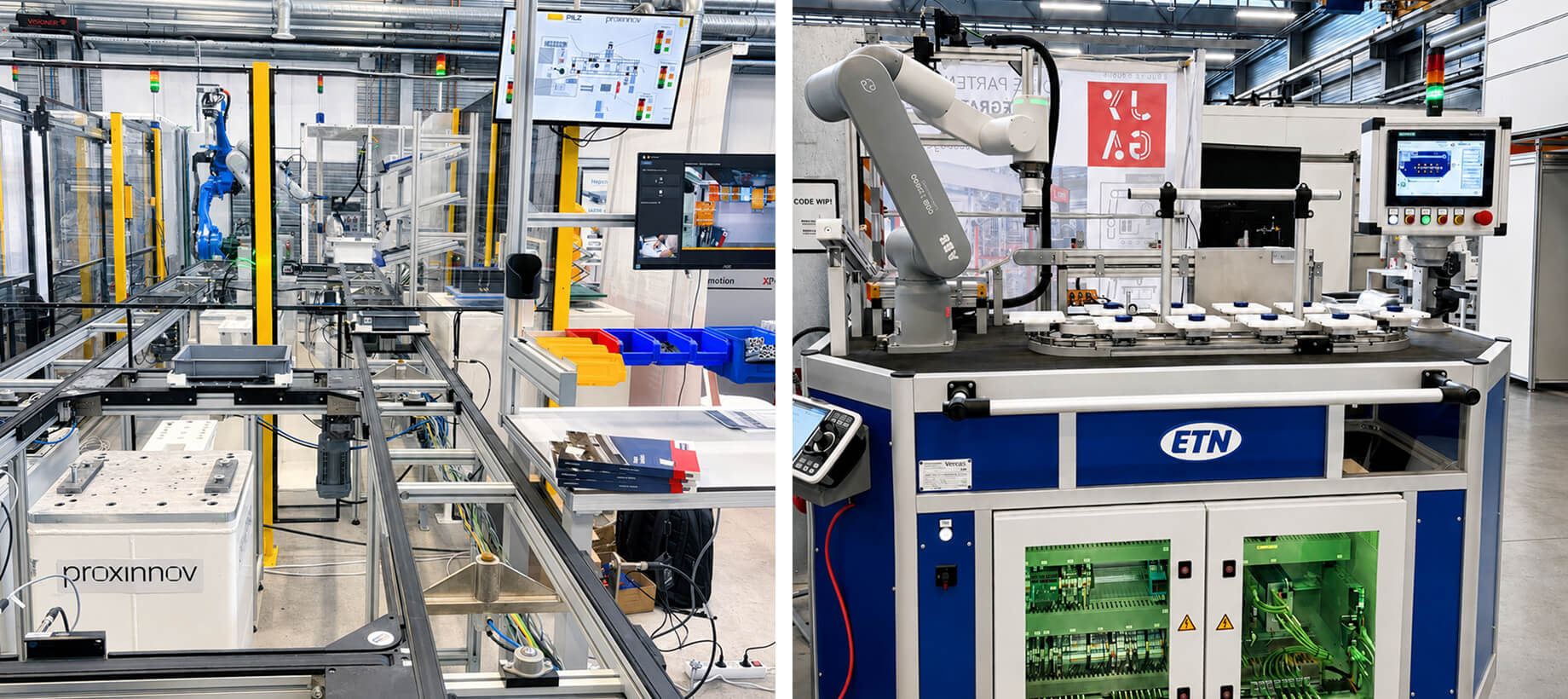
Industrial Robotics Is Shifting From Capability to Deployment Readiness
The deployments that succeed rarely start by asking what a robot can do. They start by identifying what is actually slowing the line down.
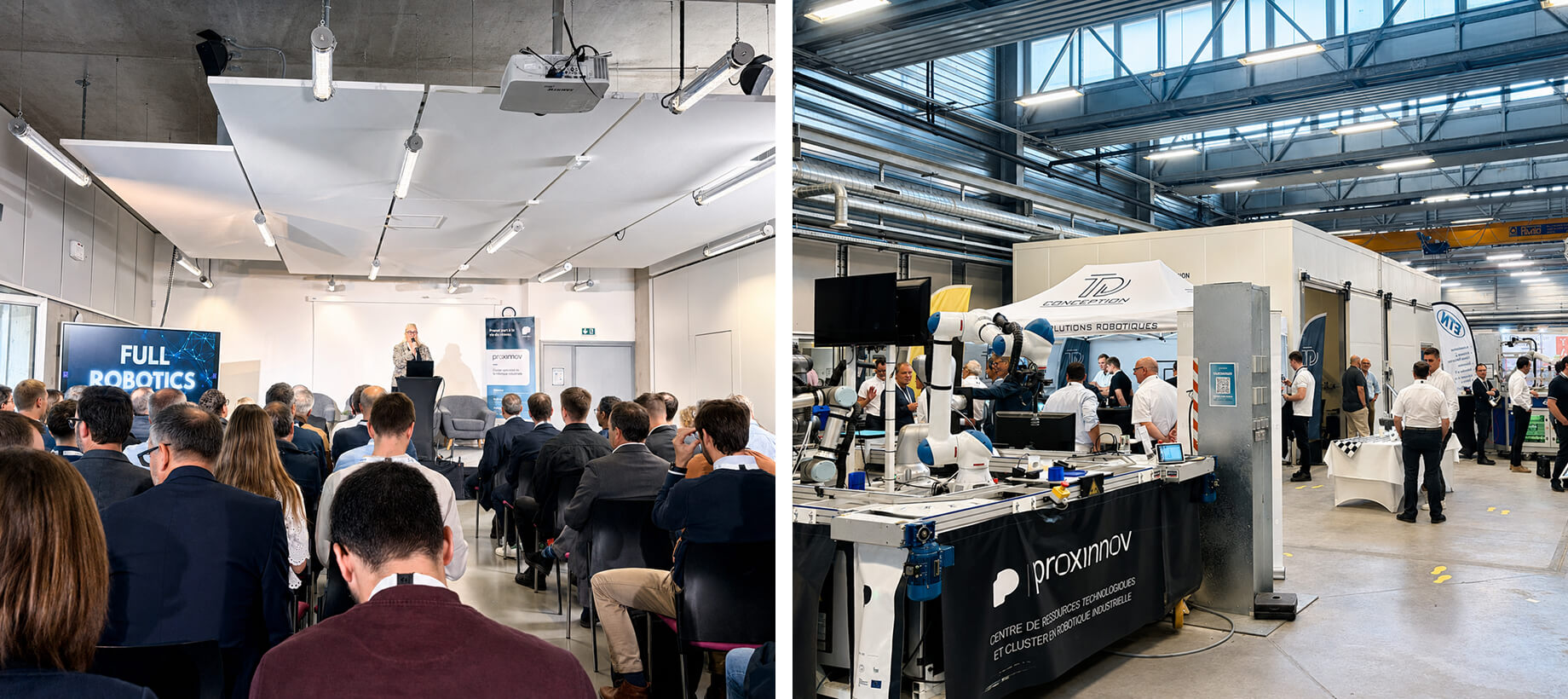
That was the clearest takeaway from this year's Full Robotics event in La Roche-sur-Yon, where leaders across robotics, automation and industrial AI explored what separates successful deployments from pilots that never scale. Practical solutions are now reaching manufacturers of all sizes, not only the largest budgets. Yet the projects holding up share one habit. They define the operational problem first, then select the technology, never the other way round.
As industrial systems grow more autonomous, data quality and readiness increasingly decide whether a solution scales reliably or stalls at the pilot stage. Technology delivers its full value only when grounded in data that reflects real operating conditions, not idealised test environments.
The strongest systems are rarely the most advanced. They are the ones built on the right problem definition.
Continue the conversation: Explore Industrial Data Workflows

Structured Data Is Becoming Industry 4.0's Defining Advantage
Most manufacturers are not short on ambition. They are short on the structured data that turns ambition into something a machine can actually act on.
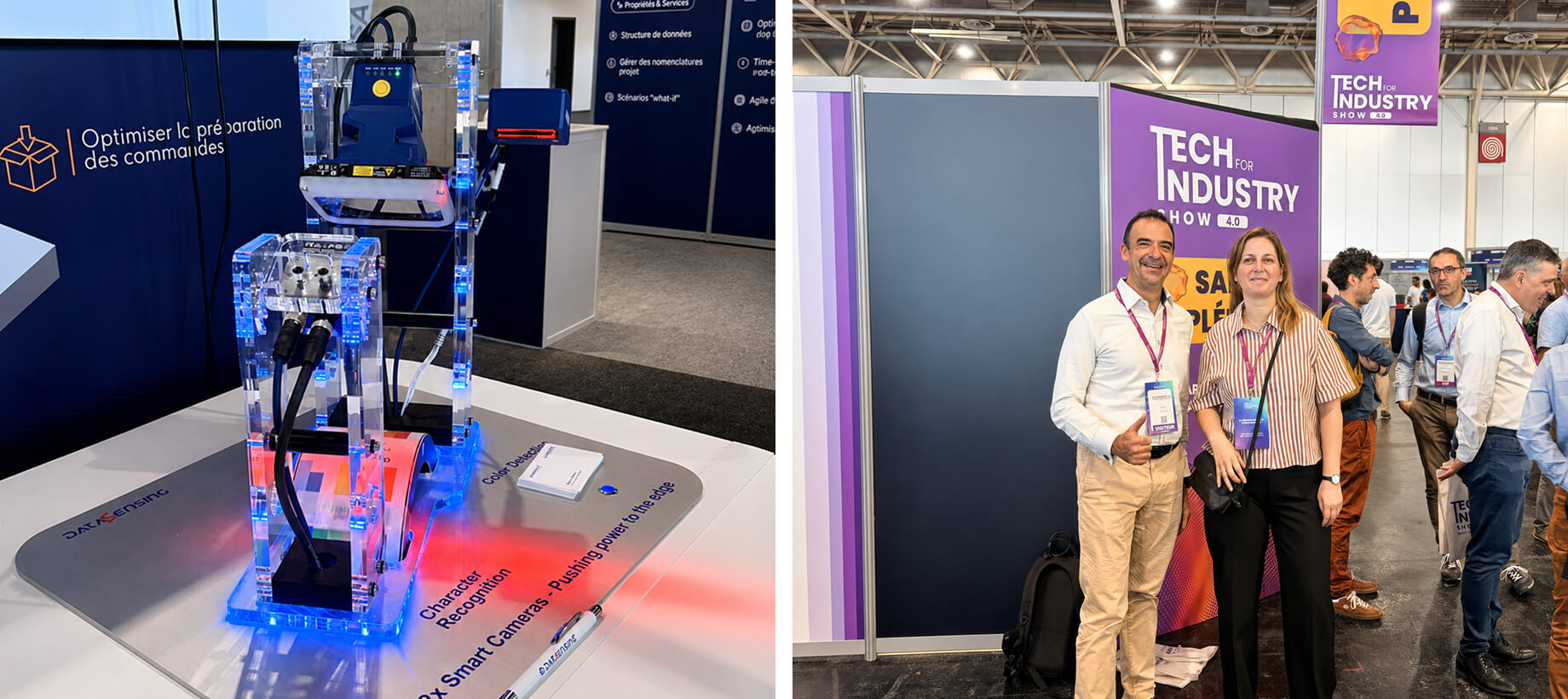
That was the throughline at this year's Tech for Industry Show, where Eric Feddal, Chief Revenue Officer, and Farah Abbes, Industry Solutions Lead for Europe, joined manufacturers, technology providers and software companies looking beyond the pilot stage of Industry 4.0. The conversations made one thing clear: the gap between ambition and execution is rarely a technology gap.
Digital transformation is accelerating, moving organisations beyond isolated pilots towards practical implementation of AI, automation and engineering software. Engineering expertise and structured data remain the foundation every successful deployment is built on, not the AI layer sitting on top. Collaboration between manufacturers, software vendors and technology partners is what turns that foundation into results that hold up in practice, not just in a demo.
What differentiates the leaders is not the AI itself, but what feeds it.
Continue the conversation: Explore Industrial AI Strategy



The Standard That Connects Every Conversation This Month
The pattern holding across every conversation this month was not subtle. Models are easier to build than ever. The data, governance and integration behind them are not, and that gap is where most AI initiatives quietly stall.
The organisations moving ahead, whether seeking regulatory clearance in oncology, integrating AI into hospital workflows, or scaling robotics on the factory floor, treat that gap as the first problem to solve, not the last. They invest in the structure underneath the model before they invest in the model itself.
IngeData's ISO 9001 and ISO/IEC 27001:2022 certified workflows are built for exactly that reality. Across healthcare, Earth Observation and Industry 5.0, our work is grounded in the same principle that ran through every conversation this month. Data has to hold up under scrutiny, not just perform in controlled conditions.
If any of this month's themes reflect something your organisation is working through, we welcome a focused conversation.