Heading 1
Heading 2
Heading 3
Heading 4
Heading 5
Heading 6
Lorem ipsum dolor sit amet, consectetur adipiscing elit, sed do eiusmod tempor incididunt ut labore et dolore magna aliqua. Ut enim ad minim veniam, quis nostrud exercitation ullamco laboris nisi ut aliquip ex ea commodo consequat. Duis aute irure dolor in reprehenderit in voluptate velit esse cillum dolore eu fugiat nulla pariatur.
Block quote
Ordered list
- Item 1
- Item 2
- Item 3
Unordered list
- Item A
- Item B
- Item C
Bold text
Emphasis
Superscript
Subscript
Reliable AI does not start with the model. It starts with what comes before it.
As organisations move AI from initiatives into operational environments, a more important question is emerging: how can AI deliver reliable outcomes at scale?
This month, three developments highlighted a common challenge across AI adoption. In Madagascar, an AI Ideathon showed how developing future AI talent requires more than access to technology. At HLTH Europe, healthcare leaders explored what is needed to move AI from promising pilots into trusted clinical environments. In industry, organisations continue to address the operational readiness required to deploy AI reliably.
Across these developments, the same pattern emerged. The organisations making the strongest progress are those investing in the people, data, and operational foundations required to turn AI potential into practical outcomes.
Building AI Capability Starts With People
How Orange Ainga Data is helping strengthen Madagascar’s AI ecosystem
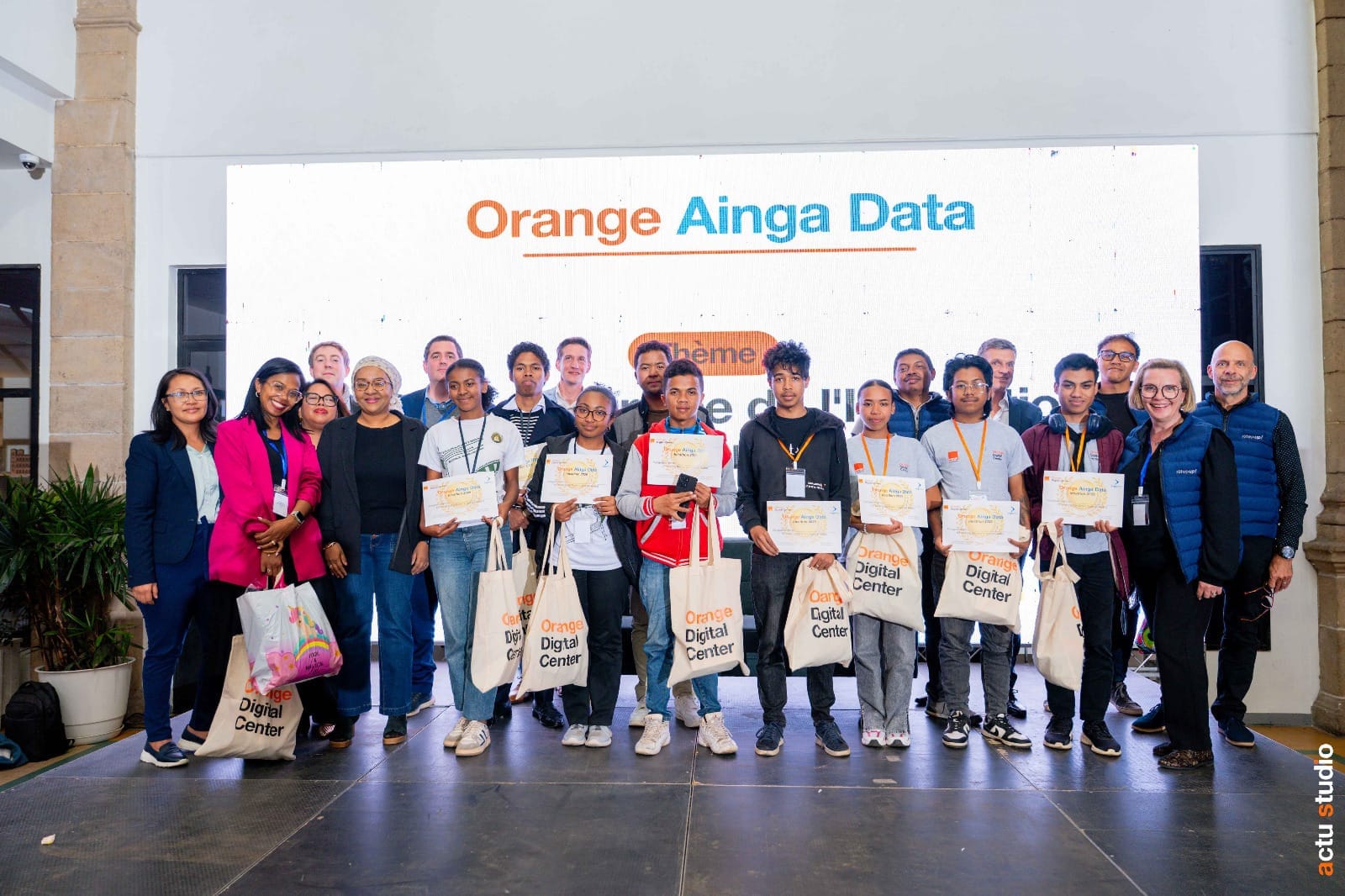

As organisations move from AI initiatives towards deployment, access to technology is only one part of the challenge. Developing the capability to apply AI effectively is becoming essential for sustainable AI progress.
This was the focus behind Orange Ainga Data, co-organised by IngeData and Orange Digital Center Madagascar. The initiative brought together more than 200 students, educators, researchers, and industry partners in Antananarivo to explore Data Science and Artificial Intelligence through practical problem solving.
Through an Ideathon, student teams developed AI solutions based on real business challenges provided by industry partners. Supported by mentors, participants explored how AI could address practical use cases while strengthening their technical and problem-solving skills.
The programme continued beyond the event through structured AI training designed to connect academic knowledge with the skills required for professional AI projects.
As Mathieu Debersée, Chief Operating Officer at IngeData, highlighted, excellence in Data and AI is built first and foremost through training and practice.
Building a sustainable AI ecosystem requires more than technical education. It depends on sustained collaboration between academia, industry, and AI experts to develop practical skills and create pathways from learning to industry application.
Explore the Orange Ainga Data Initiative
Healthcare AI Is Moving From Pilots to Clinical Practice
Why data readiness is critical to scaling clinical AI


Healthcare organisations are entering a new phase of AI development. The challenge is no longer only proving that AI works. It is establishing the data foundation required to support reliable AI use in clinical practice.
During discussions at HLTH Europe 2026 in Amsterdam, Tony Thomas, Chief Commercial Officer for Healthcare at IngeData, highlighted a consistent shift across healthcare and medtech organisations. The barrier to scaling AI is rarely the model itself. It is the quality, structure, interoperability, and governance of the data supporting it.
Fragmented data, inconsistent standards, and regulatory requirements continue to determine whether AI initiatives can move from promising pilots to reliable clinical applications.
For healthcare leaders, data readiness should be treated as a strategic priority from the beginning of an AI initiative, not a technical consideration addressed after a solution has been selected. Reliable clinical AI depends on workflows designed for accuracy, traceability, and clinical application.
Industrial AI Success Depends on Operational Data Readiness
Why moving beyond pilots requires more than advanced AI models

Industrial AI adoption is accelerating, but many organisations continue to face the same challenge: moving from pilots to reliable deployment at scale.
The organisations making the strongest progress are not necessarily those with the most advanced AI models. They are the ones that invested early in the expertise, processes, and data practices required to turn operational data into reliable AI outcomes.
Many industrial organisations already generate significant volumes of operational data. The challenge is transforming that information into structured, validated, and contextualised inputs that AI systems can use consistently within operational environments. This requires clear data standards, reliable workflows, and the operational context needed to support effective AI deployment.
As Industry 5.0 evolves, successful AI deployment will depend on more than the model itself. It will require the combination of engineering expertise, domain knowledge, and reliable data workflows needed to connect AI with real operational environments.
See How We Support Industrial AI
Moving AI Into Production Requires the Right Foundations
Reliable AI is not defined by the model alone. It depends on the quality of the data, expertise, and operational processes that enable organisations to deploy AI with confidence.
IngeData helps organisations establish trusted data workflows through ISO 9001 and ISO/IEC 27001:2022 certified processes, supporting high-stakes AI applications where accuracy, reliability, and governance are essential.
If your organisation is working to move AI from pilot to production, we welcome the opportunity to discuss your priorities and challenges.