Robot manipulation data
Some movements look simple. Teaching them isn’t.
Picking. Fitting. Inserting. Adjusting. Handling. Repeating
Many of the movements humans barely think about still need to be demonstrated clearly and consistently before a robot can learn from them.
The movement may look simple, but the data behind it isn’t. Trajectory, coordination, object interaction, viewpoint and lighting can all affect what the model learns.
IngeData supports precise robot manipulation and multi-step tasks, shaped around the requirements of each programme.
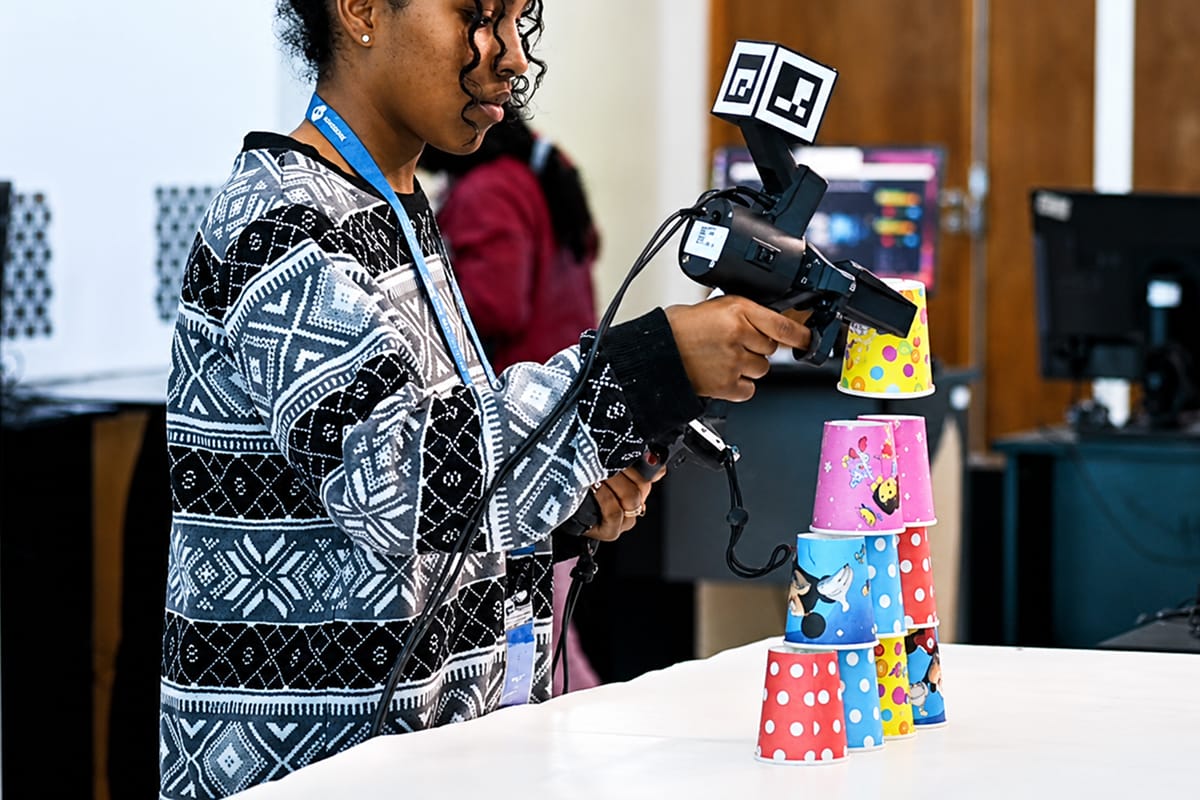
More training data. Less infrastructure to build around it.
The challenge isn’t just collecting more data. It’s producing it consistently as the programme grows.
Keep model development moving
Access the demonstrations your programme needs without building a full capture operation internally.
0
1
Keep model development moving
Scale with the programme
Start focused and increase production as your training requirements grow.
0
2
Scale with the programme
Train around the task
Capture demonstrations in setups shaped around what the robot actually needs to learn.
0
3
Train around the task
Keep standards consistent
Increase production without letting the quality of the demonstrations drift with it.
0
4
Keep standards consistent
How it works
You define the task. We run the data operation.
Tell us what the robot needs to learn, where it needs to learn it and the scale you’re working towards. We build and manage the operation behind the human demonstration data.
Step 1
Managed end to end
Define the task, environment and programme needs.
Output:
A capture plan shaped around the task and expected production volume.
Output:
A capture plan shaped around the task and expected production volume.
Step 2
Build the operation
Run supervised production to an agreed protocol.
Operation:
Station setup, calibration, protocol and a dedicated team.
Operation:
Station setup, calibration, protocol and a dedicated team.
Step 3
Deliver the data
Receive structured human demonstration data ready for training.
Delivery:
Three synchronised views per demonstration, captured to your protocol.
Delivery:
Three synchronised views per demonstration, captured to your protocol.
How it works
You define the task. We run the data operation.
Tell us what the robot needs to learn, where it needs to learn it and the scale you’re working towards. We build and manage the operation behind the human demonstration data.
Step 1
Managed end to end
Define the task, environment and programme needs. Output: A capture plan shaped around the task and expected production volume.
Step 2
Build the operation
Run supervised production to an agreed protocol. Operation: Station setup, calibration, protocol and a dedicated team.
Step 3
Deliver the data
Receive structured human demonstration data ready for training. Delivery: Three synchronised views per demonstration, captured to your protocol.
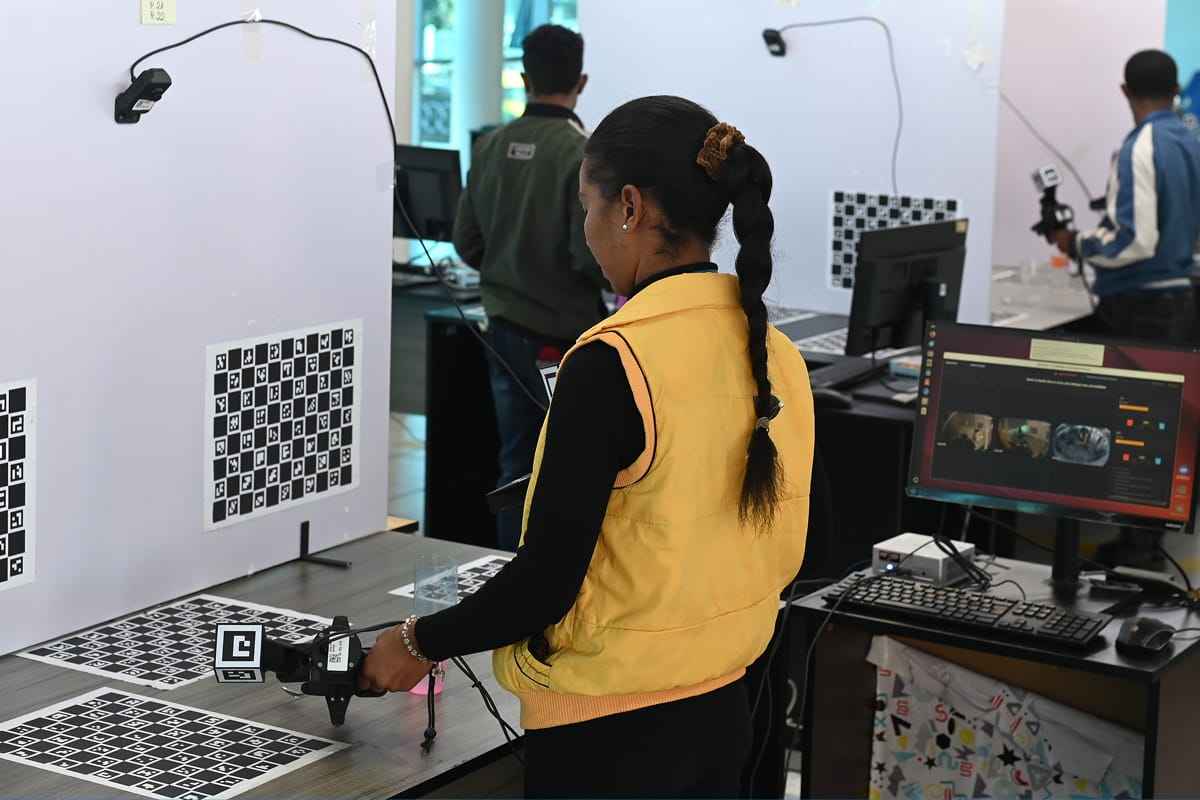
The Capture Environment
Build around your task
Different behaviours call for different surroundings. We configure the capture environment around what needs to be learned, rather than forcing every programme into the same setup.
Standard stations
Controlled setups for repeatable manipulation tasks.
Open layouts
More room for demonstrations that involve larger movements or wider working areas.
Complex sets
Purpose-built environments for tasks that need to reflect more of the real world.
Why Us
Production discipline for Physical AI
We bring the people, processes and production controls needed to turn robotics training data collection into a repeatable operation.
Managed end to end
We manage the operational layer around the programme, from setup through ongoing production.
Dedicated teams
Stable operational teams help maintain continuity across long-running programmes.
Production experience
Our background in complex AI data operations, including ISO-certified workflows, brings established processes into Physical AI.
Secure by design
Controlled operations and ISO-certified processes support programmes where security, quality and governance matter.
Frequently asked questions
Need more information we haven't addressed? Get to know more about what Robotics mean in IngeData.
